
 By
By 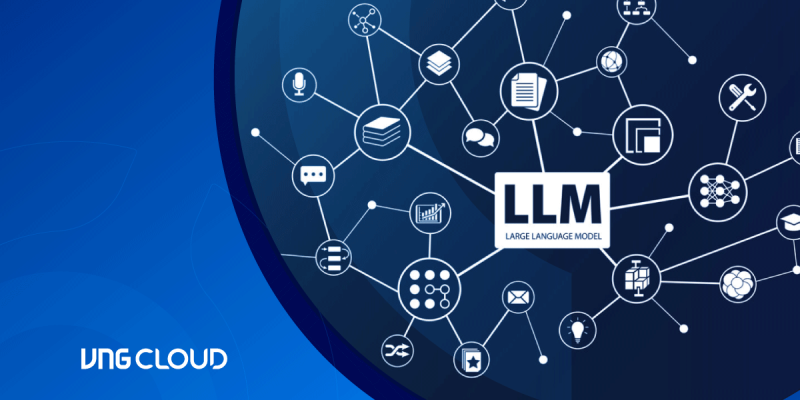
Large Language Models are a type of artificial intelligence trained on massive amounts of text data. They can read, write, summarize, translate, and even write code. In the simplest terms, they predict what word or sentence comes next based on everything they have learned. That is how a model like ChatGPT can answer a question, finish your sentence, or explain a complex topic in plain English.
At their core, LLMs are built on a technology called the Transformer architecture – introduced by Google researchers in 2017. Since then, these models have grown from millions to hundreds of billions of parameters (think of parameters as the ‘memory’ of the model). More parameters generally means better performance – but also higher computing cost.
How Do LLMs Actually Work?
When you type a prompt, the LLM doesn’t search a database. It generates a response one token at a time – using patterns it learned during training. Training happens on enormous text datasets: websites, books, academic papers, code repositories, and more.
Here’s the basic process behind every LLM:
- Pre-training: The model reads billions of words and learns language patterns.
- Fine-tuning: It’s then trained on specific tasks (Q&A, coding, etc.) to improve accuracy.
- RLHF (Reinforcement Learning from Human Feedback): Human reviewers rate responses so the model learns what’s helpful, safe, and accurate.
Popular LLMs: A Comparison
There’s no shortage of LLMs today. Here’s how the most widely used ones stack up:
| Model | Creator | Parameters | Best For | Access |
| GPT-4o | OpenAI | ~1.8T (est.) | General use, coding, images | API / ChatGPT |
| Claude 3.5 | Anthropic | Undisclosed | Long context, safe outputs | API / Claude.ai |
| Gemini 1.5 | Undisclosed | Multimodal, search tasks | API / Bard | |
| LLaMA 3 | Meta | 70B / 405B | Open-source research | Open source |
| Mistral 7B | Mistral AI | 7B | Lightweight, fast tasks | Open source |
What Can LLMs Be Used For?
LLMs aren’t just chatbots. They’re being embedded into tools across industries – from healthcare to software development. Here are the most impactful use cases:
| Use Case | Example | Popular Tool |
| Code Generation | Write, debug, or explain code | GitHub Copilot, Claude |
| Content Writing | Blogs, emails, scripts | ChatGPT, Jasper |
| Customer Support | Chatbots, FAQ automation | Intercom AI, Zendesk |
| Research Assistance | Summarize papers, extract data | Perplexity, Claude |
| Language Translation | Translate documents or speech | DeepL, Google Translate |
Limitations You Should Know About
LLMs are impressive – but they’re not perfect. Here’s what to watch out for:
- Hallucinations: LLMs can confidently state incorrect facts. Always verify important information.
- Bias: They learn from human-generated text, which includes human biases.
- Knowledge cutoff: Most models have a training cutoff and don’t know about recent events unless given tools.
- Cost: Running large models at scale requires significant computing resources and energy.
The Future of LLMs
We’re still in the early innings. Researchers are working on models that can reason more like humans, handle longer context windows, and connect to real-time data. Multimodal LLMs – ones that work across text, images, audio, and video – are already here and growing fast.
One key trend to watch: smaller, more efficient models. Companies and researchers are increasingly focused on making capable LLMs that run on lower-end hardware – making AI more accessible to everyone, not just tech giants.
Whether you’re a developer, business owner, or curious reader, understanding LLMs helps you use them better and think critically about their place in the world. The technology isn’t slowing down – and neither should your understanding of it.








Comments