
 By
By 
FreeCell is often hailed as one of the most skill-based versions of Solitaire. Unlike many other Solitaire variations, FreeCell requires more than just luck; it demands strategic thinking and advanced planning. Players must employ logical reasoning, consider multiple moves ahead, and adapt their strategy based on the ever-changing layout of cards. If you’re a Solitaire enthusiast looking to challenge your mind, FreeCell is the perfect game to test your skills.
Understanding the Basics of Free Cell
FreeCell is a variation of the classic Solitaire game that has become immensely popular over the years. What sets FreeCell apart is its unique setup. Unlike traditional Solitaire, where cards are dealt in piles, FreeCell presents all cards face-up at the start. Players can see every card, which adds a layer of strategy and decision-making. This open layout is one of the primary reasons FreeCell is regarded as a skill-based game.
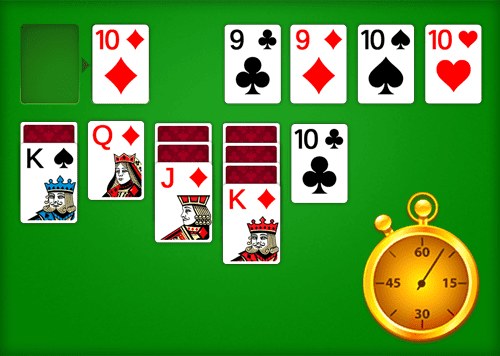
The objective is simple: to move all cards to four foundation piles, beginning with Ace and ending with King, arranged by suit. The player can move cards between the tableau (the eight piles) and the four free cells at the top, helping to organize the cards in descending order by alternating colors. The trick, however, lies in the limited number of free cells and empty tableau spaces, which are crucial for executing successful moves.
The Role of Strategy in Free Cell
The key to mastering FreeCell lies in the strategy you employ. While luck is a minimal factor, skillful planning makes a significant difference in gameplay. Here are a few reasons why FreeCell is considered a highly skill-based game:
1. Planning Your Moves
In FreeCell, each move matters. Players must think ahead and plan their moves carefully. When moving cards from the tableau to the free cells, it’s essential to anticipate the consequences of each action. What might seem like a good move in the moment could block future moves if not considered carefully.
2. Managing Free Cells Wisely
Free cell is limited to only four spaces, and these spaces act as a temporary holding area for cards. The best players are those who can use the free cells strategically, filling them with cards that open up crucial tableau spaces. Every move you make should be designed to free up more tableau spaces, creating more flexibility in the game.
3. Empty Tableau Piles Are Vital
Empty tableau piles are an invaluable resource in FreeCell. Once a tableau pile is empty, you can move any card to that pile. This ability to temporarily store cards in empty piles adds flexibility to your strategy. Knowing when to free up a tableau space can be the difference between winning and losing. Empty tableau piles can enable you to maneuver cards around the tableau to achieve your goal.
Why Skill Is Crucial in Free Cell
What distinguishes FreeCell from other Solitaire games is the significant role skill plays in winning. Unlike some variations of Solitaire, where the layout of cards may leave a game unwinnable, FreeCell is entirely solvable if approached with the right strategy. Even if the initial card layout seems difficult, it’s the player’s decisions that determine the outcome.
1. Predicting Potential Obstacles
In FreeCell, players often have to consider future moves before they can make a decision. Since every card is visible at the start of the game, you can predict obstacles and plan around them. Sometimes, that means delaying a move for several turns to ensure that a later move will be more effective. Unlike other Solitaire versions where you might be forced into difficult choices without full knowledge of the cards, FreeCell’s visible deck allows players to anticipate roadblocks and strategize accordingly.
2. Managing Multiple Card Stacks
FreeCell requires players to juggle multiple card stacks at once. The game forces players to make decisions that impact several tableau piles, meaning that focusing on one pile at a time will often lead to failure. Players who master FreeCell are those who can manage all tableau piles simultaneously, paying attention to what cards are being moved and what cards are being uncovered.
3. Solving Complex Layouts
Although FreeCell games are solvable, some layouts can be more difficult than others. As a skill-based game, the challenge lies in solving these complex setups. Some layouts are straightforward and easy to win, while others require deeper thinking and more creative solutions. It’s not uncommon to encounter a situation where you must “undo” a move and reconsider your strategy.
Free Cell vs. Other Solitaire Variations
While FreeCell is one of the most skill-based Solitaire games, other versions like Klondike or Spider Solitaire often rely on luck as much as skill. In Klondike Solitaire, for instance, cards are hidden from view, and your ability to strategize is limited to the cards you can see. In contrast, FreeCell’s open layout allows for more complex decision-making and tactical gameplay. For players looking for a greater challenge, FreeCell is the clear winner.
Spider Solitaire, on the other hand, involves a higher number of cards and a larger tableau, making it more about pattern recognition than long-term planning. Although Spider Solitaire can also be skillful, it doesn’t require the same level of forethought as FreeCell does. In FreeCell, a single bad move can block an entire series of subsequent moves, making each choice feel more critical.
The Psychology Behind Free Cell
The skill-based nature of FreeCell encourages players to think critically, hone their problem-solving skills, and stay focused. It’s a game that requires patience and concentration, as making hasty moves will often result in failure. As players become more skilled, they develop the ability to recognize patterns, anticipate challenges, and plan moves in a way that optimizes their chances of winning.
FreeCell also promotes cognitive benefits like improved memory and concentration. The need to keep track of cards and anticipate future moves builds mental agility, and playing regularly can improve decision-making abilities in real life.
How to Improve Your Free Cell Skills
If you’re ready to master FreeCell, here are a few tips to elevate your gameplay:
- Practice Regularly: Like any skill-based game, practice is crucial. The more you play, the more you’ll understand the nuances of the game and develop your own strategies.
- Think Several Moves Ahead: Anticipating future moves is essential in FreeCell. Don’t rush your moves; always think about how your current choice will affect future decisions.
- Use the Undo Button: FreeCell allows you to undo a move. Don’t be afraid to use this feature when you realize a mistake was made. Learning from your errors is a great way to improve.
- Start with Easier Puzzles: Before diving into harder games, start with simpler layouts to get a feel for the strategy involved. Once you feel confident, you can tackle more complex puzzles.
- Stay Calm: FreeCell requires patience and focus. Don’t let frustration cloud your judgment. Keep calm and think through your moves carefully.
Conclusion
FreeCell stands out as one of the most skill-based Solitaire games because it combines strategic planning, problem-solving, and critical thinking. Unlike other Solitaire variations where luck plays a larger role, FreeCell allows players to control the outcome with careful decision-making. Whether you’re a seasoned player or just starting, mastering FreeCell will provide you with a rewarding and mentally stimulating experience. Keep practicing, think ahead, and enjoy the challenge!







Comments